Cart
0
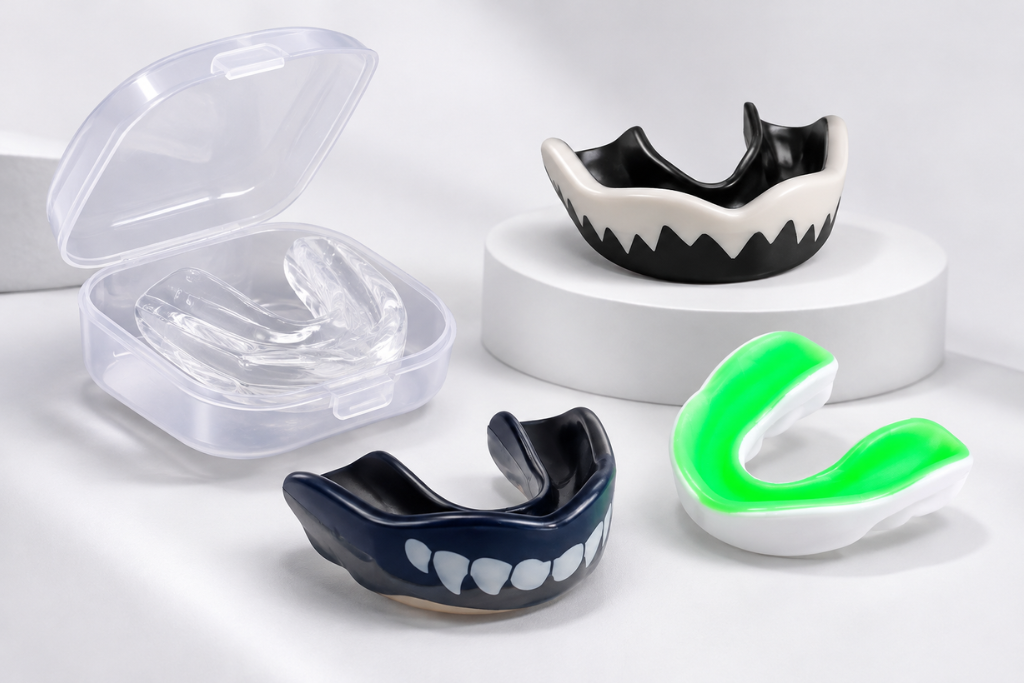
Boxing and Mixed Martial Arts (MMA) are tough sports. One punch, kick or sudden knock can chip a tooth, cut a lip or hurt your gums. That’s why a good mouth guard is never optional. But have you ever wondered how one is actually made? Mouth guard manufacturers don’t just shape a piece of plastic. They think about material, fit, comfort and impact protection at every step
We at Cox50 are experts in making sports mouth guards for boxing, MMA and other contact sports. Let's take a look at how a quality mouth guard is made.
1. It Starts With the Right Material
The first decision is the material. A mouth guard has to be soft enough to feel comfortable, yet strong enough to survive hard training week after week. Most mouth guards are made of EVA (Ethylene Vinyl Acetate). Why is that? Because it's bendy, shock-resistant, and it spreads the force of a hit instead of letting it land on one tooth
A good material should:
Be flexible for a comfortable fit
Be durable enough for regular training
Be excellent at absorbing impact
Be smooth inside the mouth
Be safe for oral use
Like our Gel Mouth Guard. It uses a food grade EVA. If it is too hard or sharp, it's not going to be much of a barrier, and you won't wear it.
2. Designing the Shape
Up first is the style of the piece. You also know that boxers and MMA fighters spend a lot of time fighting for positioning, twisting and squaring, clinching and falling, taking and delivering blows. If the guard escapes or restricts breathing, it's worthless.
A good quality mouth guard should:
Protect your teeth adequately
Hold firmly without squeezing too hard
Have smooth, rounded edges
Make breathing easier
Stay in place during rounds
While most mouthguards protect the upper teeth, some are designed to protect the top and bottom rows of teeth. The aim here? An ideal combination of comfort, fit, and protection.
3. Adding Protective Layers
For the best protection, don't all mouth guards provide the same amount of padding? Not all mouth guards provide the same amount of protection, though. The more layers you have, the more padding you will receive.
A single-layer guard is simple, light and perfect for moderate use or activity.
Use a double-layer guard. The Armour Double Layer Mouth Guard features two materials – a softer inside material for comfort and a firm plastic shell to protect and support your teeth. It's ideal for those hard-hitting training sessions.
There are also triple-density guards that employ zones of different firmness levels to absorb impact in a phased manner. For example, the Fender Triple Density Mouth Guard features an extra shock-absorbing layer designed for contact sports.
So, do you pick? Honestly, it all depends on your sport, your training regimen and what is right for you.
4. Moulding the Guard
After the design has been created the material is shaped and moulded into a smooth, uniform shape that overlays and contacts your teeth, creating a perfect fit. Good moulding should result in: no rough edges, no thin fragile areas, and no sharp areas.
A majority of the sports mouth guards are "boil and bite." These are made of a thermoplastic material that you soften in hot water, bite into, and it forms to the shape of your teeth. The Extreme Mouth Guard uses this technology, which lets you custom fit your mouth guard at home. A custom fit will stay comfortably in place.
Also if you have braces, crowns, or other dental work make sure you talk to your dentist before purchasing a mouth guard.
5. Checking Quality Before It Ships
Once production is complete, all guards are subject to a quality check, which includes the following:
Fit: Does it sit snugly over your teeth?
Comfort: Does it rub or irritate?
Sturdiness: Will it be durable?
Breathing: Can you breathe easily while wearing it?
Finish: Are the edges smooth and neat?
Not all mouth guards are created equal. But a quality, custom-fitted mouth guard can help protect you from more serious dental injuries.
6. Picking the Right Guard for Your Sport
Your boxing and MMA guard requirements can vary as well.
In a boxing match, punches come flying to the face and jaw all the time, so more than anything, you want a tight and secure guard.
In MMA, it's punches, kicks, and grappling. In addition to protection, you want a snug fit that's easy to breathe through.
Final Thoughts
A mouth guard starts with the right choices; each element of its construction is important and can make all the difference to the final product. From the material you use, through the design of the mouthguard, to how you mould and finish it – gets these right, and you'll have a protective, yet comfortable mouth guard.
This is the best type of headgear you can buy for boxing and MMA training, if you're going to be training on a daily basis. Feel free to look around at the different options, choose the headgear you like best for your style and make sure it fits!
FAQs
1. Why do boxers and MMA fighters wear mouth guards?
They aid in preventing broken teeth, cut lips and other mouth injuries.
2. What material are mouth guards usually made of?
Most of those are made of EVA since it's very soft, flexible, durable and resilient.
3. Is a double-layer mouth guard better than a single-layer mouth guard?
Designed to provide additional padding although fit and construction quality matter just as much.
4. How often do I need to replace my mouth guard?
No time constraints. Change it when it wears out, cracks, becomes loose or falls out, or doesn't fit properly.