Cart
0

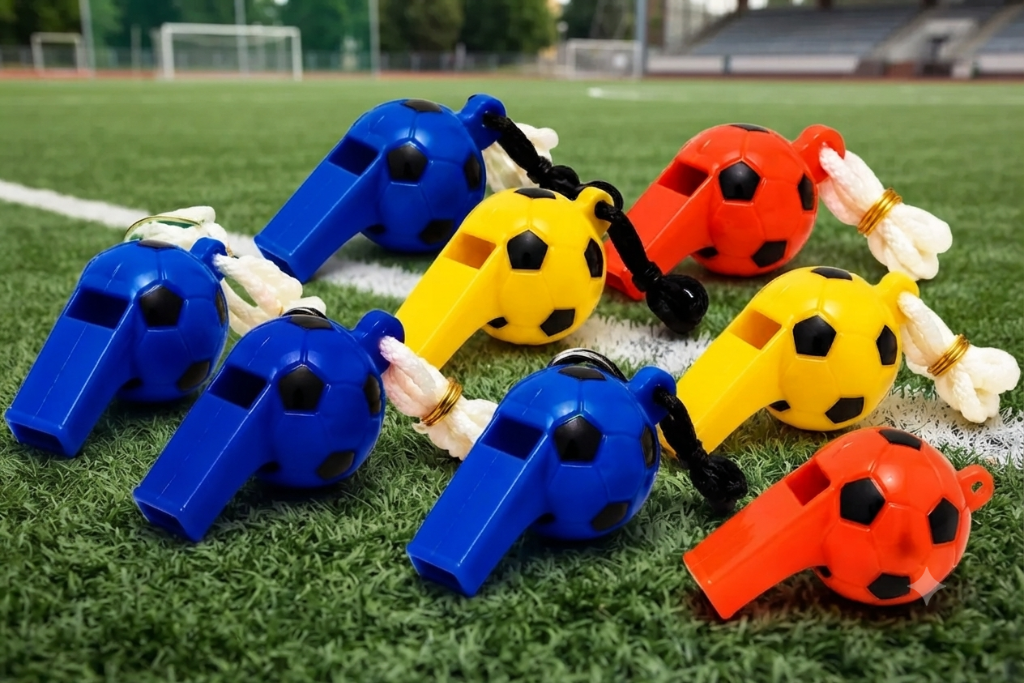
In any competitive match, a whistle is more than just a small accessory. It is a key communication tool that ensures order, fairness, and safety. Whether it’s football, cricket, athletics, or school tournaments, referees rely on whistles to cut through noise and command attention instantly. But not all whistles perform the same. Some sound sharp and carry across the field, while others struggle to be heard.
1. The Science Behind a Loud Whistle
A whistle produces sound when air is forced through a small opening, causing vibrations inside the chamber. The design of this chamber determines how strong and sharp the sound will be. High-quality whistles are engineered to produce higher frequency sounds. These higher pitches travel more effectively through background noise, making them easier to hear during crowded or outdoor matches.
2. Why Frequency Matters More Than Volume
It’s not just about how loud a whistle is—it’s about how well it cuts through noise. In a stadium or open field, can include cheering crowds, wind, and player movement. A whistle with the right pitch stands out because the human ear detects certain frequencies more clearly. Reliable whistle suppliers focus on designs that create sharp, penetrating tones rather than just increasing volume.
3. Material and Build Quality
The material used in manufacturing a whistle plays a major role in its performance. Durable plastics and reinforced materials help maintain sound consistency even after repeated use. Lower-quality materials may crack, weaken, or distort the sound over time. Professional whistle suppliers ensure that their products are made from strong, weather-resistant materials that maintain clarity in both indoor and outdoor conditions.
4. Pealess vs. Traditional Whistles
There are two common types of whistles: traditional whistles with a small ball inside (often called a pea) and pealess whistles. Pealess whistles are often preferred in professional matches because they are less likely to jam or freeze in cold weather.
5. Reliability in High-Pressure Situations
During fast-paced matches, referees need tools they can trust. A whistle must respond immediately with consistent sound every time it is blown. Imagine a referee trying to stop play during a crucial moment, but the whistle produces a weak or unclear sound. This can create confusion and disrupt the flow of the game.
6. A Practical Example from the Field
Consider a school-level football match played on a windy afternoon. The referee uses a well-designed whistle that produces a sharp, high-pitched sound. Even with wind and crowd noise, players instantly react. Now compare this to a low-quality whistle that produces a dull tone. The sound gets lost in the environment, causing delayed reactions and confusion.
7. Choosing the Right Whistle Supplier
When selecting whistles for professional or school matches, working with experienced whistle suppliers ensures quality and consistency. Trusted suppliers prioritize sound engineering, durable materials, and performance testing. Cox50 focuses on delivering sports accessories designed for reliability and durability.
The Role of Engineering in Match Equipment
A whistle may look simple, but its performance depends on careful design and material selection. From internal airflow channels to chamber shape, each detail affects sound output. Quality manufacturing ensures that referees can rely on their equipment in every match, whether it’s a local tournament or a competitive league.
Small Tool, Big Impact on the Game
A whistle might be small, but its impact on a match is significant. Loud, clear, and reliable performance supports fair play and smooth communication. By understanding the factors behind sound quality and choosing trusted whistle suppliers, organizers and referees can ensure every call is heard clearly across the field.